Ulrich Hayes · 19 November 2026
Exploring Fungal Mycelium Networks and Their Capacity to Bind Particles in Recovering Arid Expanses During Later Stabilization Stages
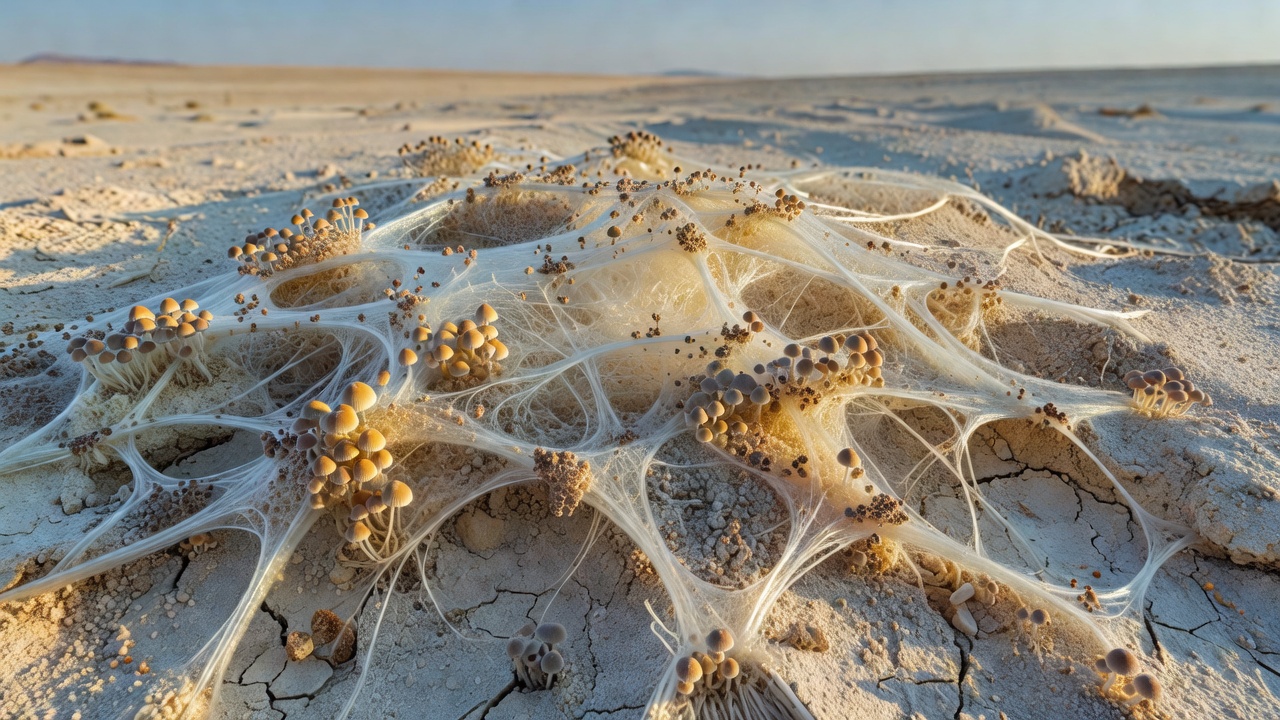
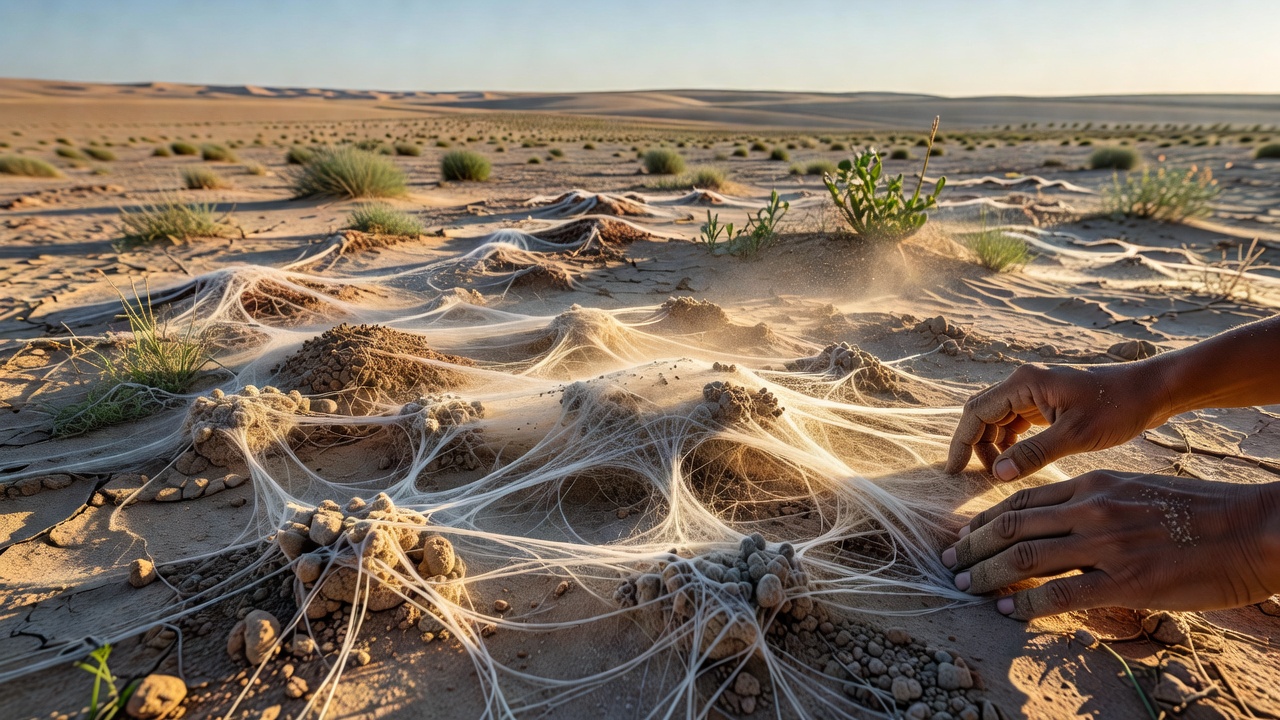
Researchers have documented how fungal mycelium networks extend through recovering arid expanses and bind loose particles once initial vegetation cover takes hold, and this process becomes particularly evident during later stabilization stages when sediment mobility decreases substantially. The hyphal strands create extensive underground matrices that aggregate sand and silt into more cohesive structures, and data from field studies show these networks increase soil shear strength by factors ranging from three to seven times compared to bare substrates.
Mechanisms of Particle Binding in Arid Recovery
Mycelium achieves particle binding through both physical entanglement and biochemical secretions, while the thin hyphae thread between grains and secrete sticky polysaccharides that act as natural glues. Observers note that these compounds persist in dry conditions because many arid-adapted fungi produce extracellular polymers resistant to desiccation, and laboratory analyses confirm the polymers remain functional even when soil moisture drops below five percent. In later stabilization phases the networks also trap finer dust particles that settle from the air, which gradually builds a thin surface crust that further reduces wind erosion.
Integration with Established Vegetation
Once pioneer plants have anchored the surface, mycelium from mycorrhizal species colonizes their root systems and expands outward, and this expansion connects multiple plant individuals into shared resource networks. Studies conducted across the southwestern United States reveal that these common mycorrhizal networks distribute water and nutrients during infrequent rainfall events, and the same connections simultaneously reinforce soil structure by linking root systems with fungal threads. Data collected by the CSIRO Land and Water division in Australia demonstrate that mycelium density peaks in the third to fifth year after initial stabilization begins, coinciding with the period when dune migration rates fall below one meter per year.
What's notable is how fungal species composition shifts as stabilization progresses; early colonizers give way to more persistent basidiomycetes that maintain longer-lived networks, and these later species often produce thicker rhizomorphs capable of bridging larger gaps between soil aggregates. Researchers tracking recovery plots in the Negev Desert recorded a threefold increase in water-stable aggregates between years four and seven, and the majority of that gain correlated directly with rising mycelium biomass rather than root density alone.
Observed Effects on Sediment Dynamics
Particle binding by mycelium reduces both wind and water erosion rates once the landscape enters the later stabilization window, and measurements taken with portable wind tunnels show threshold friction velocities rising from 0.2 meters per second on bare sand to over 0.6 meters per second where dense hyphal mats are present. The networks also influence microtopography by creating small ridges and depressions that slow surface runoff during rare heavy rains, and this micro-relief further protects newly formed aggregates. In regions where grazing pressure remains low, the combined effect allows organic matter to accumulate at rates of 0.4 to 0.8 tons per hectare annually, which in turn supports continued fungal growth.
Those who monitor long-term restoration sites report that mycelium contributions become measurable within eighteen months of vegetation establishment, yet the most pronounced binding occurs after the fourth year when fungal biomass has had time to ramify through deeper soil layers. European research coordinated through the European Soil Data Centre similarly tracks aggregate stability in Mediterranean drylands and finds comparable timelines, confirming that the pattern holds across different arid climates.
Current Monitoring Approaches
Scientists employ a combination of soil core sampling, ergosterol assays, and high-resolution imaging to quantify mycelium extent during later stabilization stages, and these methods allow differentiation between fungal and root contributions to soil cohesion. Remote sensing platforms now detect changes in surface reflectance that correlate with crust formation, and ground-truthing campaigns scheduled for November 2026 will test whether satellite-derived indices can reliably estimate mycelium-driven aggregation across larger expanses. The resulting datasets help land managers decide when active intervention can safely decrease without risking renewed sediment movement.
Conclusion
Evidence gathered from multiple arid recovery projects shows that fungal mycelium networks play a measurable role in binding particles once vegetation cover has begun to stabilize moving sediments, and the process strengthens over subsequent years as fungal communities mature. Continued monitoring and measurement of these networks provide practical indicators for assessing when reclamation efforts have reached durable later stages, and the same data inform decisions about reducing supplementary measures such as fencing or supplemental seeding.